
Phone
9874 7684
-
 By: Tony
- Comments Off on Lexus IS Common Problems: A Mechanic’s Guide for Sydney Owners
 By:

The Lexus IS has a reputation for being one of the most reliable used prestige sedans you can buy in Sydney, and honestly that reputation is deserved. But “reliable” is not the same as “faultless”, and after years of servicing IS models at our West Ryde workshop, I can tell you the faults are predictable. If you know your variant and its weak points, an IS is one of the cheapest luxury cars to keep on the road.
Quick Answer: The most common Lexus IS problems depend on the variant. The IS250’s 4GR-FSE V6 is known for intake-valve carbon build-up and oil consumption, the IS350’s 2GR-FSE for water pump and timing cover leaks, early 2006-2010 cars for a check-engine-light fault traced to the PCM, IS300h owners mainly watch hybrid battery health, and every IS owner in Sydney knows about the melting dashboard. We service and diagnose all of them at West Ryde Service Centre with dealer-level Techstream diagnostics, genuine parts and logbook servicing at independent prices.
Common Symptoms
Most IS problems announce themselves early if you know what to watch for. These are the signs we hear about most often from IS owners across Sydney:
- Rough or hunting idle on a cold IS250 morning start, sometimes with a misfire code or sluggish response when you put your foot down.
- Rising oil consumption between services, usually on higher-kilometre 4GR-FSE engines.
- Coolant loss or a sweet smell after a drive on IS350s, with a crusty stain near the front of the engine.
- A check engine light that comes with a shift-quality change on 2006-2010 IS250 and IS350 models, often with a whole bundle of transmission-style codes at once.
- A sticky, shiny or melting dashboard on cars that live outside in the Sydney sun.
- A clicking noise from the rear suspension on high-kilometre XE20 models, usually first noticed in car parks.
- Dropping fuel economy on an IS300h, sometimes with the hybrid battery fan working overtime in summer.
None of these mean the car is a lemon. They mean it is telling you where to look, which is exactly what the rest of this guide does.
Possible Causes: What Each Variant Struggles With
The IS ran two main generations here, and the faults split cleanly by engine. Knowing which engine is under the bonnet tells you what to watch.
IS250 4GR-FSE: intake-valve carbon build-up
The 4GR-FSE is a direct-injected V6, so fuel sprays straight into the cylinder and never washes over the back of the intake valves. Over years of Sydney short trips, carbon cakes onto those valves and you get rough idle, misfire codes and a car that feels gutless. Walnut blasting is the accepted fix, and it genuinely transforms an IS250 that has gone sluggish.
IS250 4GR-FSE: oil consumption
Higher-kilometre 4GR-FSE engines are widely reported by owners to use oil between services, partly related to the same carbon and ring wear pattern. The fix is diagnosis first: check breathing, leak history and consumption rate before spending anything.
IS350 2GR-FSE: water pump and timing cover leaks
The 3.5-litre 2GR-FSE is a brilliant engine, but owners report premature water pump failures, with coolant from the weep hole or a bearing whine, plus timing-cover and high-pressure fuel pump leaks. You can read more about sorting oil leaks here.
2006-2010 IS250/IS350: the PCM check-engine-light fault
Early cars can throw a trio of codes (P0751, P2714, P0894) that look like a transmission failure. US repair data traces many of these to the powertrain control module itself rather than the gearbox, so get it properly diagnosed before anyone quotes you a transmission rebuild.
IS300h: hybrid battery health
The IS300h pairs a 2.5 four with Toyota’s hybrid system and an e-CVT. The NiMH battery is durable and owner-reported life commonly runs well beyond 150,000 km, often 10 to 15 years. What kills packs early is heat, which is why an annual cell-voltage health check matters in our climate.
Dashboard melting
Sticky, glossing dashboards are a known issue on 2000s Lexus and Toyota models, and it gets far worse in the Australian sun than anything you will read about on US forums. There were even customer-support dash-replacement programs overseas. A windscreen shade costs $20 and genuinely slows it down.
Two smaller ones worth a mention: rear-suspension clicking on high-mileage XE20 cars (annoying, not dangerous, cheap to fix) and the inside rear-view mirror discolouring on 2006-2010 cars.
How the Problem Is Diagnosed
Every IS that comes in with a complaint gets diagnosed in a sequence that saves you money, because the expensive answer is rarely the correct one on these cars.
Full scan with Techstream. A generic scan tool gives you a code; official Toyota/Lexus Techstream software (which we run through a J2534 PassThru device) gives you the sub-codes, freeze-frame data and live values that point at the real fault.
Interrogate the codes properly. That P0751/P2714/P0894 bundle on an early car gets tested against shift data before anyone breathes the word “transmission”. On IS250 rough-idle complaints we look at misfire counters per cylinder.
Check the intake valves. Carbon build-up gets confirmed, not guessed. A borescope through the intake tells us in minutes whether the valves are caked or the problem lives elsewhere.
Pressure-test the cooling system and inspect the pump. Weep-hole staining, bearing play and timing-cover seepage on 2GR-FSE cars are all visible when you know where to look.
Test hybrid battery cell voltages. On an IS300h we check individual block voltages and cooling-fan operation. A fading pack shows up in the data long before the warning light, which is how owners avoid a roadside surprise.
We had a 2008 IS250 in from Ryde last year with all three of those PCM codes showing as a single “transmission fault” on the owner’s cheap reader, after another shop suggested a gearbox replacement. Twenty minutes with Techstream showed clean shift solenoid data and the fault history pointing at the module itself. That is the difference between a module repair and a four-figure quote for work the car never needed.
What Happens If You Ignore It
Here is the honest mechanic’s version: none of these faults strand you tomorrow, which is exactly why they get ignored. But carbon build-up slowly chokes an IS250 and can end in misfire damage, a failing water pump takes an engine past its temperature limit on a 40-degree day on Victoria Road, and a hybrid pack left unmonitored eventually fails at full price instead of being managed early. The IS rewards owners who act on small signs. It punishes the ones who wait for big ones.
How West Ryde Service Centre Can Help
We are an independent Lexus specialist at 1135 Victoria Road, West Ryde, and we have been fixing Sydney’s cars since 1981, with more than 240 Google reviews behind us. For IS owners specifically:
- Logbook servicing to Lexus intervals (every 15,000 km or 12 months) with genuine parts, so your service history and statutory rights under Australian Consumer Law stay intact.
- Dealer-level diagnostics without dealer pricing. Techstream through J2534 PassThru lets us read sub-codes, register smart keys, calibrate ABS and check hybrid battery cell voltages, everything a dealer can read.
- Carbon cleans, cooling system repairs and hybrid health checks quoted after diagnosis, not estimated blind.
- Honest guidance on used-IS purchases, including prepurchase inspections.
Want a fixed-price quote for your IS? Call us on (02) 9874 7684 or book online.
Our Lexus IS Experience
Because the IS shares so much hardware with Toyota’s local lineup, we see plenty of them, from XE20 IS250s doing the Meadowbank-to-city run to XE30 IS300h models used as family cars. A few patterns from the hoist worth knowing:
- XE20 (2006-2013) IS250/IS350/IS F: carbon and oil use on the 4GR-FSE, water pumps and timing covers on the 2GR-FSE, the early-car PCM fault, melting dashes. This is the generation to inspect carefully as a used buy.
- XE30 (2014-2020) IS300/IS350/IS300h: far fewer known problems; watch hybrid battery health on the IS300h and stay on top of logbook services.
- IS500: the naturally aspirated 5.0 is essentially the same engine family Toyota has trusted for years; regular oil and coolant attention is all it asks.
The IS250s we see with rough-idle complaints are almost always short-trip cars that sit in Sydney traffic all week. Cars that regularly stretch their legs on the M2 build carbon far more slowly. That is first-party observation from our own workshop, not a forum legend.
If you are comparing the IS against European rivals, we also cover the common problems of the Audi A3, the Mercedes W204 C-Class and the VW Golf in our other model guides. You may also find our piece on the differences between an independent specialist and a dealership useful, because the same economics apply to Lexus.
Local Context: Sydney Ownership
Two things make IS ownership different in Sydney compared with what you read on overseas forums. The first is our sun: dashboard melting is far more aggressive with Australian UV than the US threads suggest, so shade the windscreen whenever the car lives outside. Summer heat also stresses coolant systems and hybrid battery cooling, so a pre-summer check is cheap insurance.
The second is traffic. Short trips from Ryde to Macquarie Park never let a direct-injected engine get hot enough to stay clean, which is the IS250’s worst enemy. Plenty of our Gladesville customers run older IS250s and the pattern holds for every one of them: the highway runners stay clean, the school-run cars need attention sooner.
Related Services & Articles
- Lexus service in Sydney – our IS, ES, NX and RX servicing page, with Techstream diagnostics and logbook servicing at independent prices.
- Lexus hybrid servicing – battery health checks and hybrid logbook servicing for IS300h owners.
- Logbook servicing – how we keep your Lexus warranty and service history intact.
- Mechanical repairs and car servicing – cooling system repairs, diagnosis and general mechanical work.
- Rough idle diagnosis guide – the deep dive on vacuum leaks, coils and carbon (much of it applies to the 4GR-FSE).
- Check engine light: common codes explained – what P0751-style codes do and do not mean.
Frequently Asked Questions
What are the most common problems with a Lexus IS?
By variant: the IS250’s 4GR-FSE engine is prone to intake-valve carbon build-up and oil consumption, the IS350’s 2GR-FSE to water pump and timing cover leaks, early 2006-2010 cars to a check-engine-light fault traced to the PCM, the IS300h to gradual hybrid battery ageing, and most Sydney ISs to dashboard melting in the sun. All are well documented and manageable when caught early.
Is the Lexus IS250 a reliable car?
Yes. The IS250 is mechanically tough and major failures are rare. Its two known weak points, carbon build-up and oil consumption, are maintenance-manageable rather than fatal. An IS250 with a clean service history and a recent carbon clean is one of the safest used prestige buys in Australia.
Why does my Lexus IS250 use oil?
Higher-kilometre 4GR-FSE engines are widely reported by owners to consume oil between services, related to ring wear and the same combustion-by-product buildup behind the carbon problem. Check the PCV and breather system first, confirm the consumption rate with a measured test, and top up between services rather than letting the level run low.
Does the Lexus IS250 have carbon build-up problems?
It can. Because the 4GR-FSE injects fuel directly into the cylinder, nothing washes the intake valves, and carbon accumulates over tens of thousands of kilometres, especially with short-trip driving. Typical signs are rough idle, misfire codes and sluggish response. Walnut blasting is the accepted fix, and we quote it after inspection because the severity varies hugely between cars.
Why is my Lexus dashboard sticky or melting?
Heat and UV. It is a known issue on 2000s Lexus and Toyota models, and Australian sun makes it much worse than overseas reports suggest. Lexus ran customer-support dash-replacement programs in some markets. A windscreen shade, garage parking or a dash mat slows it down; replacement is the only real fix once the surface has gone glossy and soft.
How long does a Lexus IS300h hybrid battery last?
The NiMH pack is one of the toughest things in the car. Owner-reported life commonly runs well beyond 150,000 km, often 10 to 15 years. Those are owner figures rather than a factory spec, but the pattern is consistent: keep the battery cooling vents clean, have the cell voltages checked annually, and heat is the main enemy in Sydney.
Is the Lexus IS expensive to service in Australia?
Not really. Lexus logbook servicing runs every 15,000 km or 12 months, and market quotes for the 75,000 km service on AutoGuru sit around $493-$690 (one Sydney IS example came in at $653.10 inc GST). Owners report dealer major services at roughly $1,150-$1,400, while an independent Lexus specialist with the same Techstream access typically charges well under that.
Which Lexus IS years have the most problems?
Rather than avoiding any year outright, check the known windows: 2006-2010 cars carry the PCM/CEL fault risk and mirror discolouration reported in US repair data, high-kilometre IS250s carry the carbon and oil-use pattern, and any IS living outside in Sydney should be inspected for dash melt. A prepurchase inspection picks all of this up in an hour.
Can an independent workshop service my Lexus without voiding the warranty?
Yes. Under Australian Consumer Law, using an independent specialist does not void your statutory rights, provided the work is done properly with appropriate parts and a documented logbook. We service to Lexus intervals with genuine parts and record everything, which is exactly what a warranty claim or resale buyer wants to see.
Need Expert Car Servicing in Sydney?
West Ryde Service Centre has been Sydney's trusted European and hybrid car specialist since 1981. Book your service today.
Book a Service Call (02) 9874 7684
Related Post
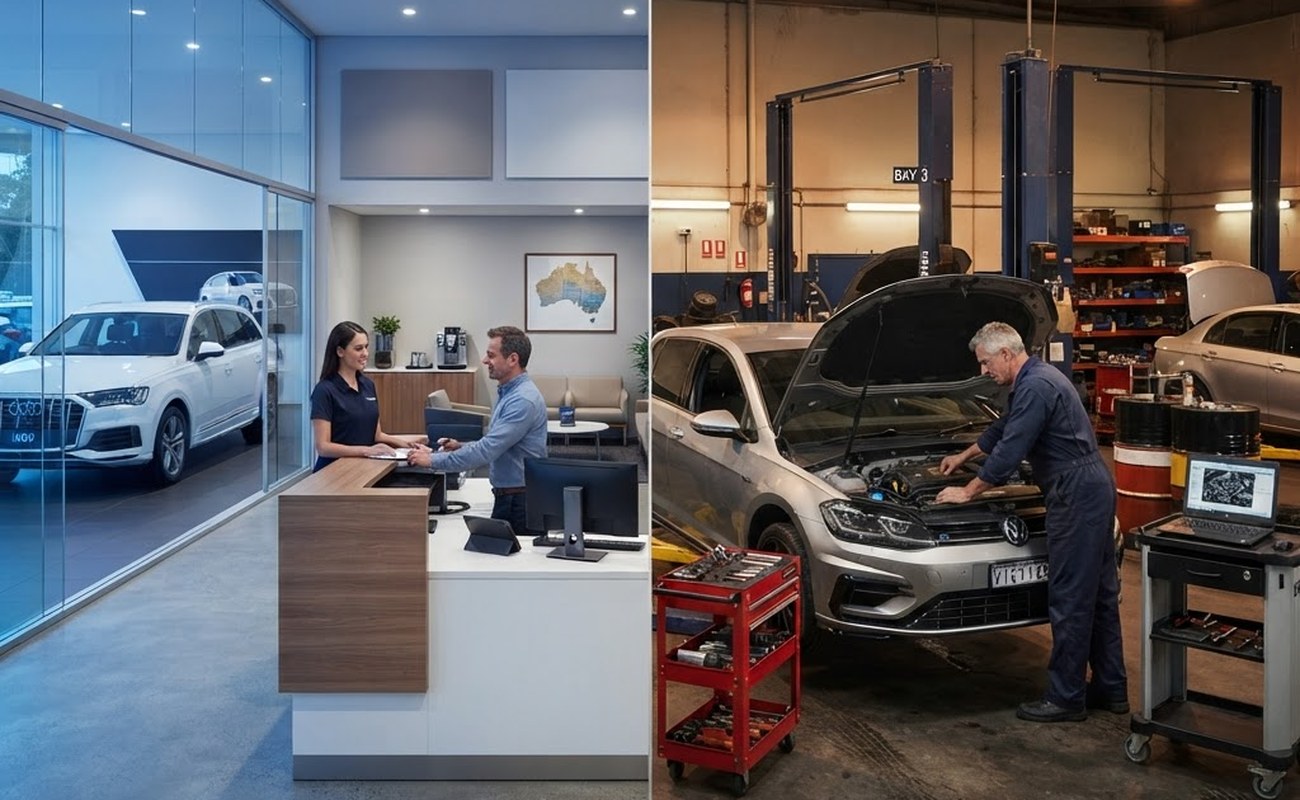
Independent European Specialist vs Dealership: What’s the Difference?
Quick Answer Quick Answer: An independent European specialist performs the same logbook-compliant servicing as a..

Porsche Service Sydney: Independent Specialist vs Dealer Cost
Porsche Service Sydney: Independent Specialist vs Dealer Cost Quick Answer: A Porsche minor service at..