
Phone
9874 7684
-
 By: Tony
- Comments Off on VW DSG Mechatronic Problems: Symptoms, Diagnosis & Repairs
 By:
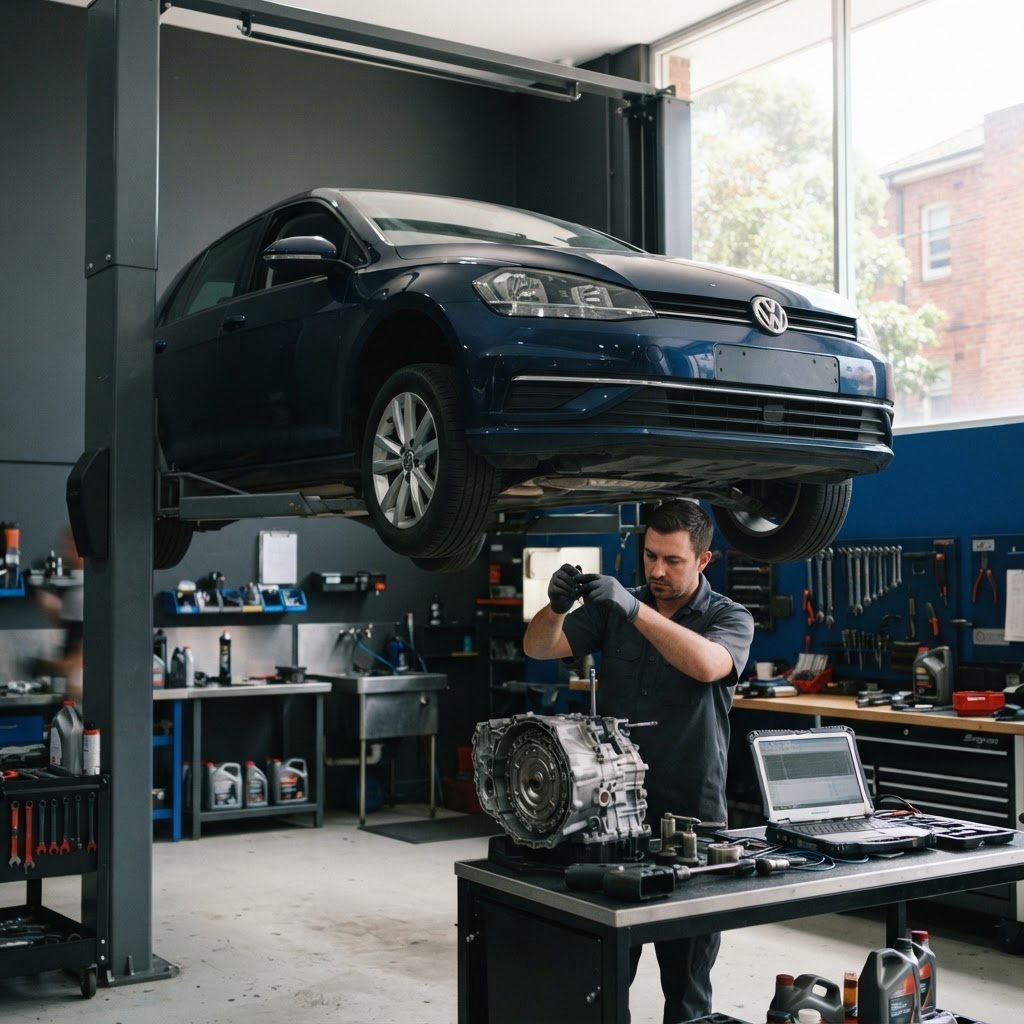
When a Volkswagen DSG starts jerking, hesitating or refusing to select a gear, the mechatronic unit is often the first suspect. It is not always the culprit, though. Clutch wear, low voltage, fluid or wiring faults, software adaptation and internal gearbox problems can produce very similar symptoms.
Quick Answer: VW DSG mechatronic problems can cause harsh shifts, shuddering, delayed engagement, warning messages, limp mode or loss of selected gears. West Ryde Service Centre diagnoses Volkswagen DSG faults for drivers across Sydney, including Polo, Golf, Passat, Tiguan and Touareg models. We use vehicle-specific scan data, live readings, road testing and physical checks to separate a mechatronic fault from clutch, fluid, electrical or mechanical problems before recommending a repair.
Common Symptoms of a VW DSG Mechatronic Problem
The mechatronics module combines the electronic transmission control unit, sensors and hydraulic control components. In plain English, it is a major part of how the DSG decides which gear and clutch to operate, then applies the pressure needed to make that happen.
When that control system is struggling, you may notice one symptom or several at once:
Jerking or shuddering
The car may judder when pulling away, changing from first to second, or reversing. This can also be clutch adaptation or clutch wear, so the symptom alone does not prove mechatronic failure.
Delayed engagement
There may be a pause after selecting Drive or Reverse, followed by a sudden take-up. A delay can involve hydraulic pressure, clutch control, fluid condition or an electrical supply issue.
Harsh or confused shifts
Gear changes may feel unusually hard, happen at the wrong time, or appear to skip a gear. The transmission may also hold one gear when it would normally change.
Warning message or limp mode
A gearbox warning, flashing PRNDS display or restricted gear selection means the control system has detected a fault. Stop safely if the car is unsafe to drive.
Other signs include slipping or rising engine speed without the expected road speed, loss of odd or even gears, reverse not engaging, a fault that appears only when hot, or a problem that is worse in traffic. Note exactly when it happens: cold start, after a long drive, uphill, during parking or under acceleration. That information can save diagnostic time.
Possible Causes: Mechatronics, Clutches and More
A DSG fault code is a useful starting point, not an automatic parts order. Volkswagen has used several DSG variants and software versions, and the same model name can have different engines and gearboxes across different years. The exact vehicle identification number, gearbox type and history matter.
Mechatronic electronics or hydraulic control
Internal solenoids, pressure control, sensors, circuit boards, wiring and hydraulic channels can all affect gear selection. A control fault may cause intermittent symptoms or put the transmission into a protective mode. Depending on the gearbox and confirmed fault, repair, replacement, software work or a basic setting may be considered.
Clutch pack wear or adaptation
A dual-clutch gearbox still has clutch components that wear. Shuddering at take-off, slipping and poor low-speed behaviour can be clutch-related, particularly if the issue is most obvious during parking or stop-start driving. Clutch adaptation values and road-test behaviour help distinguish this from a control fault.
Fluid, service or temperature issues
The correct fluid and service procedure depend on the DSG variant. Incorrect fluid, contamination, a leak, low level or overheating can affect operation. A scheduled service interval is not a promise that a mechatronic unit will last forever, and a mechatronic symptom is not proof that a service was missed. Volkswagen Australia says standard scheduled services are generally every 15,000 kilometres or 12 months, whichever comes first, subject to the vehicle and eligibility.
Low voltage, wiring or communication faults
A weak battery, charging problem, poor earth, damaged connector or communication fault can create transmission warnings that look more serious than the original electrical issue. That is why checking system voltage and communication is part of sensible diagnosis.
Gearbox mechanical faults
Bearings, gears, selectors and other internal components can also cause noise, lost gears or difficult engagement. If the mechatronics tests correctly, the investigation has to move further into the clutch and gearbox rather than stopping at the first stored code.
How the Problem Is Diagnosed at a Workshop
Good DSG diagnosis is a process. Replacing an expensive unit based only on a customer description or one generic scan code is not a process I would recommend.
Start with the vehicle history
We record the model, year, engine, VIN, gearbox behaviour, warning messages, service history and whether the fault is cold, hot, intermittent or load-related.
Scan all relevant systems
Vehicle-specific scan data can show stored and pending faults, measured values, clutch information and communication problems. A generic code reader may not tell the whole story.
Inspect and road test
We look for leaks, wiring damage, battery or charging issues and other visible problems, then reproduce the concern safely. Live data during a road test can be more useful than a code read on its own.
Confirm the cause before quoting
Controlled checks, adaptation information and component testing help separate mechatronics, clutch, fluid, electrical and internal gearbox faults. Only then can the repair options be explained properly.
At West Ryde Service Centre, our Volkswagen diagnostic and servicing team uses vehicle-specific VAG/ODIS diagnostic capability as part of that investigation. That does not mean every fault needs a new mechatronic unit. It means the car is assessed with the right information before a decision is made.
What Happens If You Ignore It?
A DSG that is occasionally harsh can become a DSG that will not select a gear. Continued driving with slipping, overheating, severe shuddering or a warning message can leave you stopped in traffic and may allow a related fault to cause more damage.
If the car is violently shaking, losing drive, stuck in one gear, overheating, leaking fluid or displaying a serious transmission warning, pull over somewhere safe. Do not keep testing it by accelerating harder. Arrange advice or recovery if it cannot be driven safely.
NSW guidance for used vehicles notes that warning lights should illuminate at ignition and go out once the engine starts. A warning that stays on or appears while driving deserves attention, even if the car still feels normal.
How West Ryde Service Centre Can Help
We have been servicing drivers from West Ryde, Ryde, Meadowbank, Eastwood and surrounding Sydney suburbs since 1981. Our workshop is at 1135 Victoria Rd, West Ryde NSW 2114, close to the M2 and the main Victoria Road route. You can find our broader European vehicle repair service if your vehicle needs investigation beyond the DSG itself.
Bring the VIN if you have it, the exact warning message, any scan report, the last service details and a description of when the fault happens. Volkswagen Australia provides a VIN-based recall and service-campaign checker. Historical recalls have affected particular Volkswagen Group vehicles and gearbox issues, but a recall record never means every DSG is affected. Check the individual VIN and follow the relevant Volkswagen process.
We can inspect the car, explain what the testing shows and outline the sensible repair path. The cost depends on the DSG variant, diagnosis, parts availability, software or basic settings required, and whether the clutch, gearbox or mechatronics also needs attention. I would rather give you a proper quote after inspection than publish a made-up flat price.
Relevant Volkswagen Models and Known Considerations
DSG questions come up regularly with Volkswagen Polo, Golf, Passat, Tiguan and Touareg owners. The same symptom can mean different things between a smaller dry-clutch application and a larger wet-clutch application, so model, engine, gearbox code and service history are important.
For example, a Golf that shudders only as it takes off may need clutch and adaptation checks, while a vehicle that loses selected gears with a transmission warning may point the investigation towards control, hydraulic or electrical operation. A Passat or Tiguan that develops a fault only after warming up needs temperature-related testing rather than a guess based on a cold scan.
One recent Golf came into our West Ryde workshop with a complaint that it was “just the mechatronics”. The useful part of the job was not agreeing with the diagnosis; it was reproducing the hesitation, reading the transmission data, checking the power supply and separating the take-off clutch behaviour from the control fault. That is the difference between diagnosing the car and naming an expensive component.
If your car is not a Volkswagen, the same principles still apply but the system is different. We also provide European mechanical repairs and diagnostics for vehicles that need a wider assessment.
Experiencing DSG or S-tronic issues? We provide full gearbox & transmission repairs in Sydney for all VAG vehicles — including mechatronic unit diagnostics, solenoid replacement and complete rebuilds.
Local Context for Sydney DSG Owners
Stop-start traffic on Victoria Road, short trips around Ryde and Eastwood, and long runs on the M2 all expose a transmission to different conditions. A fault that is barely noticeable on a quiet morning can become obvious after crawling through traffic or parking on a slope.
That is why “it only does it sometimes” is still useful information. Tell us whether the symptom appears in Sydney traffic, when reversing into a driveway, after the car has been parked outside overnight or after a longer motorway drive. If you are coming from Ryde or Eastwood, West Ryde is close by and the workshop is easy to reach from Victoria Road.
Plenty of our DSG work comes from drivers who’ve done the research before booking — if you’re looking for a mechanic in Gladesville, Hunters Hill or anywhere along the Parramatta River, we’re a short run down Victoria Road with same-week availability for mechatronic assessments.
Related Services & Articles
For the commercial starting point, see our VW service and repair page. For general warning lights and drivability symptoms, our European car warning-sign guide is useful background. If the scan reveals a broader engine or driveline issue, start with mechanical repairs and car servicing rather than assuming the DSG is at fault.
Frequently Asked Questions
What are the symptoms of a failing VW DSG mechatronic unit?
Common symptoms include jerking, harsh or delayed shifts, warning messages, limp mode, loss of selected gears and delayed engagement of Drive or Reverse. These symptoms overlap with clutch, fluid, electrical and mechanical faults, so they need testing before a mechatronic diagnosis is confirmed.
Why is my VW DSG jerking when taking off?
Take-off shudder can relate to clutch wear or adaptation, contamination, control pressure, software or other drivetrain issues. The pattern, temperature, scan data and road test are needed to separate the likely causes.
Can a VW DSG mechatronic unit be repaired?
Depending on the DSG variant and confirmed fault, repair, replacement, software work or a basic setting may be considered. The correct option depends on the test results and parts availability; there is no responsible one-size-fits-all answer.
How is a DSG mechatronic fault diagnosed?
A workshop reviews the history, scans the transmission with vehicle-specific data, checks live values and communication, inspects the vehicle and road tests it safely. Clutch, voltage, fluid and mechanical checks may also be required.
How much does VW DSG mechatronic repair cost in Sydney?
There is no reliable single Sydney price. Cost varies with the DSG type, confirmed fault, parts, labour, software or settings and whether clutch or gearbox work is also required. An inspection is the right way to obtain a genuine quote.
Is it safe to drive with a DSG warning light?
It depends on the warning and how the car behaves. If it loses drive, is stuck in gear, shudders severely, overheats or becomes unsafe, stop and arrange assistance. Do not continue driving just to see whether the warning disappears.
Should I check my Volkswagen VIN for a recall?
Yes. Volkswagen Australia has a VIN-based recall and service-campaign checker. A campaign applies to specific vehicles, so check the individual 17-character VIN and follow Volkswagen’s instructions rather than assuming the vehicle is affected.
Where can I get a VW DSG diagnosed near Ryde?
West Ryde Service Centre is at 1135 Victoria Rd, West Ryde NSW 2114. We service Volkswagen models including Polo, Golf, Passat, Tiguan and Touareg and can assess DSG symptoms before recommending the next step.
Technical references: Volkswagen Newsroom technical glossary and DSG technology explanations; Volkswagen Australia service pricing guide; Volkswagen Australia recall and service-campaign checker; Australian Vehicle Recalls database. Accessed 26 August 2026.
Related reading
- DSG service intervals: how often the oil actually needs changing
- independent VW specialist vs dealership servicing
- where to service your European car in Sydney
Need Expert Car Servicing in Sydney?
West Ryde Service Centre has been Sydney's trusted European and hybrid car specialist since 1981. Book your service today.
Book a Service Call (02) 9874 7684
Related Post

DSG Service Intervals: How Often Should You Change the Oil?
If you own a Volkswagen Group car with a DSG gearbox, the service schedule is..
VW Golf Common Problems: A Mechanic’s Guide
Quick Answer: The most common VW Golf problems we see at West Ryde Service Centre..